Our Red String
Play Our Red String
Our Red String Screenshots


















Our Red String review
Master the dual-protagonist narrative with strategic decision-making and character relationship mechanics
Our Red String stands out as a sophisticated dual-protagonist interactive narrative experience that prioritizes player agency and meaningful consequences. This non-linear adventure places you in control of two interconnected characters whose decisions shape the entire storyline, relationship dynamics, and ultimate outcomes. Whether you’re navigating complex character relationships, optimizing stat progression, or exploring multiple story branches, understanding the game’s core mechanics and decision framework is essential. This guide explores the intricate systems that make Our Red String a compelling choice-driven experience, offering insights into how your decisions ripple through the narrative and affect character development throughout the game.
Understanding Our Red String’s Core Gameplay Mechanics
Alright, let’s pull back the curtain. 🎭 You’re not just playing a story in Our Red String; you’re the architect of it. Every click, every dialogue choice, every silent moment of hesitation is a brick in a path only you can build. The magic—and the challenge—lies in understanding the tools at your disposal. This chapter is your blueprint to mastering the Our Red String gameplay mechanics, transforming you from a passive reader into the director of a beautifully complex, intertwined drama.
How the Dual-Protagonist System Works
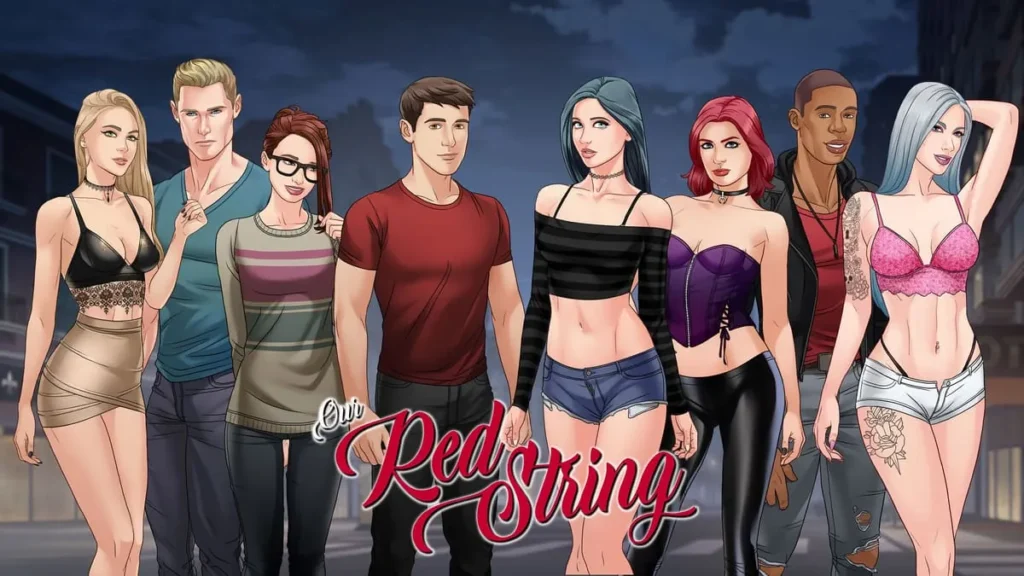
Here’s the first rule: forget everything you know about single-character narratives. The dual-protagonist game system in Our Red String isn’t a gimmick—it’s the entire heart and soul of the experience. You don’t just control one character; you alternately guide the lives of Ian and Lena, two very different people navigating the same city with their own dreams, flaws, and secrets.
Think of it like this: you’re writing a novel with two main characters, but you get to live inside both of their heads, separately. One moment, you’re making choices as Ian, the struggling musician wrestling with ambition and insecurity. The next, you’re in Lena’s shoes, a corporate assistant yearning for something more authentic and thrilling. Their stories run in parallel, and your decisions for one can ripple out and dramatically alter the world for the other, sometimes in ways you won’t see coming until much later. 🔄
This creates a unique layer of strategic thinking. It’s not just “what’s best for Ian right now?” but also “how will this affect Lena’s story down the line?” For instance, a seemingly innocent conversation Ian has at a bar might introduce a character who later becomes a pivotal—or problematic—figure in Lena’s professional life. You have to wear two hats, balancing their individual needs and watching their separate social circles collide and intertwine. This system brilliantly mirrors the chaos and connection of real life, where we are all the protagonists of our own stories while being supporting characters in others’.
My Pro-Tip: I often play through key chapters twice in quick succession. First, I make choices purely from Ian’s perspective, then again from Lena’s. It’s fascinating to see how different the same narrative events feel from the other side, and it highlights the incredible depth of this system.
The Stats System and Character Development
You can’t build a compelling character without growth, and Our Red String quantifies this growth in a beautifully straightforward way. This is where character stats and progression come into play, giving tangible weight to your role-playing decisions. Ian and Lena each have four core attributes that define their capabilities and personalities: Wits, Charisma, Athletics, and Lust.
These aren’t just passive numbers on a sheet. They are muscles you must exercise. Want Lena to stand up to a difficult boss? She’ll need enough Wits to craft a clever retort. Dream of Ian charming his way into a coveted gig? His Charisma better be up to snuff. The genius of the system is how you improve these stats: through experience points and leveling up.
Every time you make a choice aligned with a stat, you earn 1 XP in that category. Score 3 XP in a stat, and it levels up, permanently unlocking new, more advanced dialogue options and actions in future scenes. It’s a reward system that directly ties your playstyle to your character’s development. If you consistently choose bold, physical actions, your Athletics will soar. If you pursue romantic or sensual opportunities, your Lust will grow. The game remembers and adapts to the person you’re choosing to be.
Let’s break down these core stats:
| Stat | What It Governs | How You Gain XP | Example Actions |
|---|---|---|---|
| Wits 🧠 | Intelligence, problem-solving, perception, and crafty dialogue options. | Choosing smart, analytical, or strategic responses. | Solving a work problem for Lena, remembering a crucial detail, outsmarting a rival. |
| Charisma 😎 | Social charm, persuasion, confidence, and leadership. | Being persuasive, friendly, commanding, or publicly impressive. | Ian performing well on stage, Lena networking at a party, smoothing over a conflict. |
| Athletics 💪 | Physical prowess, endurance, reflexes, and bold actions. | Taking physical risks, sports, dancing, or assertive movement. | Winning a dance-off, taking a daring route, physically defending someone. |
| Lust 🔥 | Seduction, flirting, sensual confidence, and pursuing desire. | Engaging in flirtatious dialogue, intimate moments, or bold romantic gestures. | Sharing a passionate kiss, choosing a steamy dialogue option, pursuing a love interest aggressively. |
This framework means there are no “wrong” builds, only different narrative paths. A Lena with high Wits and Charisma might become a corporate queen, while one with high Athletics and Lust might chase a more volatile, passionate life. The experience points and leveling up system ensures your journey is uniquely yours.
Decision Paths and Narrative Branching
This is where Our Red String truly shines and where your agency has real teeth. The non-linear narrative choices you make don’t just nudge the story; they actively reshape its geography. Think of the plot not as a line, but as a sprawling tree with countless branches. Every decision plants a flag—a variable like [v1_alisonlunch = True]—that the game remembers forever. These flags act as keys, locking or unlocking entire branches of the story.
The story branching and decision consequences are profound. A choice in Chapter 2 might quietly close a door that doesn’t even appear on your screen until Chapter 8. This isn’t about “good” or “bad” endings; it’s about crafting a specific, nuanced story based on who Ian and Lena become through your choices. Relationship values and character affinity are the emotional currency of this system. Every interaction adjusts a hidden meter for each major character. Be supportive of Lena’s friend, and that affinity rises. Stand up Ian for a practice session, and watch his bandmate’s respect for you plummet. These values determine future dialogue, who trusts you, who helps you, and who might become a lover—or a rival.
Let me give you a concrete example from an early game moment that blew my mind. 🤯
The Scenario: As Lena, you’re invited to lunch by your co-worker, Alison.
* Choice A: “Sure, let’s go!” (Costs $$, requires medium Charisma)
* Choice B: “Sorry, I’m too busy.” (Free, no stat check)
Seems simple, right? Just a lunch date. But here’s how the story branching and decision consequences unfold:
If you choose A and succeed the Charisma check:
1. The flag [v1_alisonlunch = True] is set permanently.
2. Your affinity with Alison increases significantly. She now sees you as a friend.
3. You gain 1 XP in Charisma.
4. Unlocks in a later chapter: Alison will privately confide in you about office gossip, giving you crucial information that unlocks a new, clever (Wits-based) solution to a major work problem.
5. Unlocks even later: Alison invites you to an exclusive party, introducing you to a character who can become a major love interest or professional contact for Lena.
If you choose B or fail the Charisma check:
1. The flag [v1_alisonlunch = False] is set.
2. Your affinity with Alison decreases. She becomes politely distant.
3. The office gossip scene is permanently inaccessible. You must find a harder, often messier, way to solve the future work problem.
4. The exclusive party branch is closed forever. That potential love interest or contact never enters Lena’s life.
5. However, you saved money, and a different, perhaps more dramatic, narrative path opens up based on your struggle with the work problem.
This one lunch choice didn’t just affect a single scene; it altered Lena’s social network, her professional options, and her romantic possibilities for the entire game. This is the power of non-linear narrative choices. The game’s scene gallery, which fills in as you play, is a testament to this—showing you just how much unique content your specific decisions have unlocked (or left behind, begging for a replay!).
Mastering Our Red String gameplay mechanics is about embracing this complexity. It’s about understanding that every stat point earned and every relationship nurtured is a tool for shaping an unparalleled, personal story. The dual-protagonist game system asks you to think two moves ahead, while the deep character stats and progression ensure that the people you guide are truly your own creation. So dive in, make bold choices, and watch as your unique red string weaves a story that could only be yours. ✨
Our Red String delivers a compelling interactive experience where every decision carries weight and consequence. By understanding the dual-protagonist system, mastering the stats and relationship mechanics, and strategically navigating choice points, you unlock the full potential of this non-linear narrative. The game rewards thoughtful decision-making and encourages multiple playthroughs to explore different character paths and story outcomes. Whether you’re pursuing specific relationships, optimizing stat progression, or discovering hidden scenes, the framework outlined in this guide provides the foundation for a richer gaming experience. Take time to consider how your choices align with your desired story outcome, and don’t hesitate to explore alternative paths on subsequent playthroughs to experience the full depth of Our Red String’s interconnected narrative design.