Play Dreamland
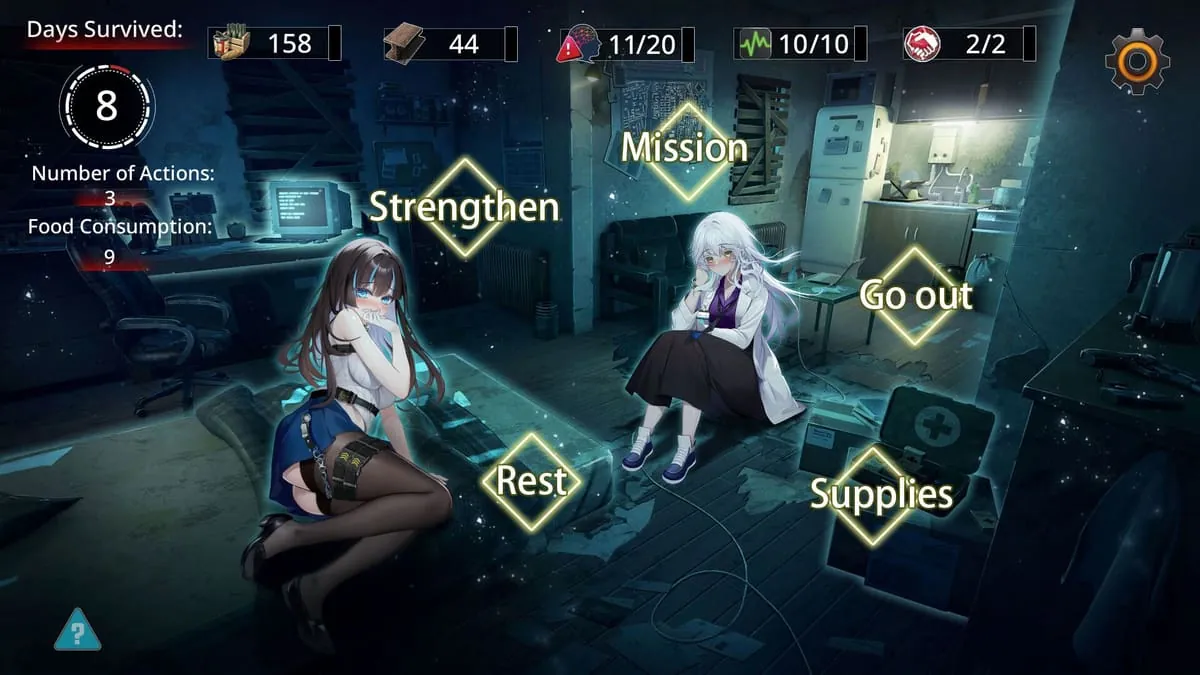
Dreamland Screenshots








Dreamland review
A practical, experience-based look at Dreamland – what it is, how it plays, and whether it’s worth your time
Dreamland is one of those niche narrative games that people stumble across through word of mouth, then can’t stop talking about. If you’ve heard about Dreamland but aren’t sure what it actually offers, this guide walks you through its story setup, core mechanics, visual style, and what it feels like to play day to day. I’ll mix in personal impressions and examples so you can quickly decide if Dreamland fits your tastes, your hardware, and the kind of interactive stories you enjoy.
What Is Dreamland and Why Has It Become So Talked About?
You’ve probably seen the name popping up in your feeds or heard a friend mention it with a certain wistful look in their eyes. But what is Dreamland, exactly? In a sea of massive open worlds and competitive shooters, this Dreamland game has carved out a passionate niche. This isn’t about unrelated titles with similar names; this is about one specific, character-driven experience that’s more about emotional journey than explosive set pieces. Let’s pull back the curtain. 🎭
At its heart, what is Dreamland? It’s a narrative-driven, choice-based adventure game. You play from a first-person perspective, navigating beautifully surreal environments and engaging in conversations that shape your relationships and the story’s outcome. Think of it less as a “game” in the traditional, score-chasing sense and more as an interactive novel where your empathy and curiosity are the primary controllers. It’s a Dreamland game overview that prioritizes mood, memory, and meaning over mechanics.
How would you describe Dreamland to a new player?
Imagine you’re handed a key to a world built from memories and desires, where the architecture bends with emotion and conversations are your most powerful tool. That’s Dreamland. 🌌
Here’s your quick elevator pitch:
* Type of Game: Narrative adventure with branching dialogue and exploration.
* Platforms: Available on PC and major consoles.
* Tone: A melancholic, introspective, and often hopeful exploration of the human psyche. It’s emotionally resonant without being overwhelmingly dark.
* Playthrough Time: A focused, single playthrough takes about 6-8 hours. However, the Dreamland story is built for replays, with different choices leading to significantly altered outcomes and character insights, easily doubling that time if you want to see everything.
My “aha” moment came about an hour in. I was standing in a vast, quiet library where the books on the shelves changed titles based on which character I was thinking about. I turned to the person I was with, a figment of the protagonist’s past, and instead of a simple dialogue tree, the game presented me with three possible emotions to lead with: regret, curiosity, or deflection. I chose curiosity. The character’s entire posture softened, and they shared a memory I hadn’t accessed before, completely altering my understanding of the plot’s central conflict. It wasn’t about picking the “right” option to win; it was about choosing who I, and by extension my character, wanted to be in that moment. That’s when I realized Dreamland wasn’t just telling me a story—it was asking me to help feel it into existence.
Story, setting and main characters in Dreamland
The Dreamland story begins with a simple, haunting premise: you are a “Dreamweaver,” a person who can consciously enter and navigate a shared subconscious space called The Echo. This isn’t a fluffy cloud kingdom; it’s a crumbling, beautiful, and sometimes unsettling landscape constructed from the collective memories and unresolved emotions of those connected to it. Your goal isn’t to conquer it, but to understand it—and in doing so, help yourself and others find closure. 🏚️✨
The setting is the star here. Locations shift and blend: a childhood home might seamlessly become a bustling train station from a pivotal adult moment. This fluidity isn’t just for visual wonder; it’s the core narrative device. The environment directly reacts to your discoveries and emotional state, making exploration a form of storytelling itself. It stands apart from other narrative games by making its surreal, dream-logic world not just a backdrop, but the very language of its plot.
This world is populated by a small but deeply fleshed-out cast of Dreamland characters. Your interactions with them are the engine of the game.
- Kai (The Protagonist): You play as Kai, a weary and compassionate Dreamweaver returning to The Echo after a long absence following a personal tragedy. Kai’s motivation is twofold: to fulfill a professional obligation to help others, and to secretly search for traces of someone they lost. Your choices define whether Kai is driven by healing, guilt, or a desperate desire to rewrite the past.
- Elara: A spirited, sharp-witted woman whose memories are fracturing within The Echo. She serves as both a client and a guide. Her relationship with Kai is a fascinating push-pull of trust and frustration, as she challenges Kai’s methods and motives at every turn.
- The Warden: A mysterious, stern presence who seems to be a custodian of The Echo. He believes Kai’s return is destabilizing the delicate world and acts as a primary source of tension, representing order versus emotional truth.
- Sam (Memory Phantom): A manifestation from Kai’s own past, Sam appears in fleeting, poignant moments. These interactions are pure, choice-driven character studies, exploring themes of regret, love, and letting go without ever feeling like cheap emotional manipulation.
The Dreamland game uses this setup to explore identity and escapism in a remarkably grounded way. It asks: if you could revisit your most cherished or painful memories, not to change them, but to understand them, would you? The power comes from its restraint—it explores heavy themes with a light touch, making the emotional beats feel earned rather than forced.
Who is Dreamland really made for?
So, after all this, who is Dreamland for? Let’s be direct. This Dreamland review perspective is that it’s a masterpiece for a specific player, and a potential snooze-fest for another. It’s not about quality, but about alignment of expectations.
The ideal Dreamland player is someone who:
* Values story and character above all else.
* Relishes slow-paced, atmospheric exploration and “vibe.”
* Loves making narrative choices and seeing their subtle consequences unfold.
* Appreciates games with high replay value to uncover different story branches.
* Doesn’t need constant action or a clear “win state” to feel satisfied.
I have a friend, a dedicated strategy gamer, who picked it up because he heard it was “trippy.” He lasted 90 minutes before messaging me, “When does the game start? I’m just walking and talking.” For him, the conversation was the game, and that wasn’t what he was looking for. Conversely, a book club friend who rarely games adored it, calling it “the most profound interactive experience” she’d ever had.
Who is Dreamland not for? If your primary gaming joys come from fast reflexes, competitive rankings, loot grinds, or solving intricate mechanical puzzles, you might find the pacing challenging. There are no enemies to fight, no platforms to jump, no stats to optimize. The conflict is almost entirely internal and interpersonal.
Think of it this way: Dreamland is a quiet, thoughtful hike through a memory forest. It’s not a rollercoaster. Your enjoyment depends on whether you find the walk itself rewarding.
To help you decide, here are a few quick signs:
| This is probably YOUR game if… | You might want to skip it if… |
|---|---|
| You love narrative gems like “What Remains of Edith Finch” or “Firewatch.” | You need combat or action sequences to stay engaged. |
| You find yourself reading every journal entry and environmental clue in games. | You prefer linear, straightforward stories without branching paths. |
| You’re moved by stories about memory, loss, and human connection. | Your gaming time is limited and you want clear, objective-driven sessions. |
| You enjoy discussing “what happened in your playthrough” with friends. | You dislike slow-burn atmospheres and prefer immediate, constant stimulation. |
Ultimately, this Dreamland game overview aims to give you the true picture. It’s a deliberate, emotional, and artistically confident experience. It doesn’t want to be everything to everyone—it wants to be something deeply meaningful to the right someone. If the idea of getting lost in a beautiful, sad, and hopeful dreamscape, where your choices weave the tale, sounds compelling, then Dreamland is absolutely worth your time. It’s less a game you simply play, and more one you patiently, thoughtfully inhabit. 🌙
Dreamland is one of those titles that quietly rewards patience, curiosity, and a taste for character-driven stories. Once you understand its slower pacing, its focus on mood, and the way it asks you to sit with your choices, it becomes much easier to see whether it belongs in your library.
If the idea of getting lost in a surreal world, investing in relationships, and revisiting key branches to see how differently things can play out sounds appealing, Dreamland is worth at least one serious run. Take your time, follow the routes that genuinely interest you, and don’t be afraid to experiment with different decisions on future playthroughs—Dreamland tends to give back as much attention as you’re willing to offer it.